
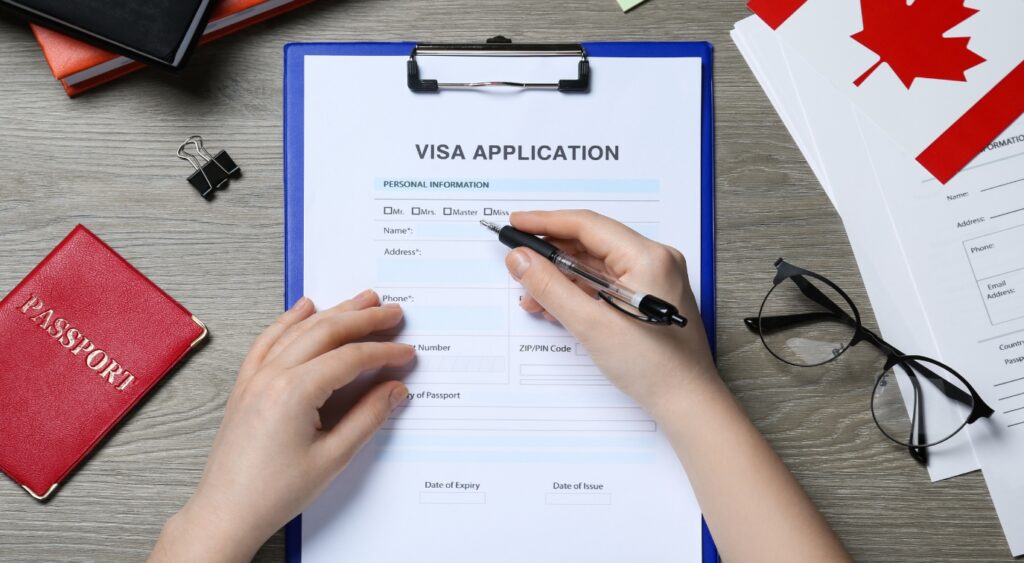
Short intro: If your passport is visa-required, you need a TRV (Temporary Resident Visa) to visit Canada. This guide explains eligibility, proof of funds, how biometrics work, forms to submit, and the most common refusal reasons—for beginners who haven’t travelled yet.
Quick Check: Are you TRV-ready?
Resultados
#1. Are you from a visa-required country?
#2. Purpose of trip
#3. Proof of funds you can show
#4. Travel history
Exciting Job Opportunities Abroad
Visa sponsorship available for qualified candidates.
Bachelor’s degree required. Visa assistance available.
Immediate openings with visa sponsorship.
Tax-free salary + benefits.
Table of Contents
Who needs a TRV vs eTA
- TRV (Visitor Visa): Required for visa-required passports. Apply online and wait for approval before travel.
- eTA: For visa-exempt passports travelling by air. It is not a visa and doesn’t guarantee entry.
- Visitors can’t work/study programs that need permits. Business visitors (meetings, conferences) can use TRV/eTA if activities fit visitor rules.
Proof of funds (how much & how to show it)
There is no fixed number for everyone. Officers assess your itinerary, length of stay, accommodation, and ties. The goal is to prove you can pay for the trip and will return on time.
| Item | What to show | Tips |
|---|---|---|
| Bank statements | Last 3–6 months (history, not just a big deposit) | Avoid sudden unexplained deposits; annotate if needed. |
| Income evidence | Payslips / employer letter / business registration | Match amounts to bank inflows. |
| Sponsor (optional) | Invitation + sponsor letter + sponsor bank proof | Explain relationship and who pays what. |
| Accommodation | Hotel bookings or host letter + address/ID | Attach confirmations with dates. |
| Itinerary | Return ticket window + activities | Keep dates coherent with funds and leave date. |
Biometrics & VAC appointment
- Most TRV applicants give biometrics (photo + fingerprints) at a Visa Application Centre (VAC).
- Wait for the Biometrics Instruction Letter (BIL), then book the appointment and attend with your passport and BIL.
- Priority services (if available) cost extra and don’t guarantee approval—only faster handling.
Forms & documents you submit
- Application form (IRCC online questionnaire generates the right forms—commonly IMM 5257 for visitors).
- Family information (e.g., IMM 5645) as requested.
- Passport (all pages with stamps/visas if asked).
- Photos (meeting IRCC specs).
- Proof of funds, ties, purpose (invitation, itinerary, bookings).
- Travel history (visas/stamps to UK/US/Schengen, Gulf, etc., if you have them).
Common refusal reasons (and fixes)
- Insufficient funds / weak financial history → Add consistent statements, income proof, and sponsor docs (if relevant).
- Purpose of visit unclear → Provide a short letter with dates, cities, activities, and who pays.
- Weak ties to home country → Show job letter, leave approval, school enrolment, property/lease, family responsibilities.
- Travel history limited → It’s okay for first-timers; strengthen other areas and keep itinerary conservative.
- Document inconsistencies → Ensure names, dates, and figures match across all documents.
If refused, you can reapply when your situation improves. Consider ordering GCMS notes for refusal details before a new submission.
Application steps (start to decision)
- Create IRCC account and complete the online questionnaire (select Visitor visa).
- Upload documents (forms, passport, photos, funds, itinerary, invitations).
- Pay fees (application + biometrics if required).
- Receive BIL and give biometrics at a VAC.
- Wait for a decision and follow passport/eVisa instructions if approved.
- At entry: carry proof of funds, ties, itinerary and return ticket; the officer decides your admitted length (often up to 6 months).
Interlinking you should read next
FAQ
How much money is enough? It depends on trip length and plan. Show consistent bank history, income, and bookings that match your dates.
Do I need an invitation letter? Not mandatory for tourism, but helpful for family/business visits.
Can I work on a TRV? No. For work you need a work permit. For study, most programs need a study permit.
How long can I stay? Often up to 6 months per entry, but final decision is by the border officer.
© 2026NextStep Europe — Educational content only, not legal advice.